
Everest Base Camp Trek altitude sickness prevention tips
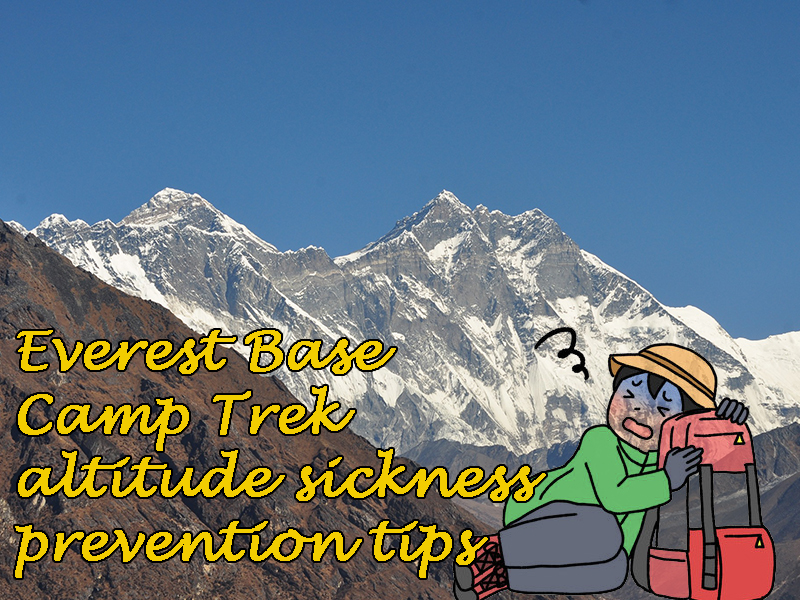
The biggest concern for trekkers during the Everest Base Camp Trek in Nepal is the risk of the altitude sickness. High up in the mountains, the oxygen density is low. Therefore, people find it hard to breathe eventually get caught with the altitude sickness. Today’s blog is about the Everest Base Camp Trek altitude sickness prevention tips. These tips are highly valuable for successful journey inside the home of the world’s tallest mountain Mt. Everest and Sherpa People.
Trekking to Everest Base Camp (5364 m) is an epic walking activity. It is loved by almost every traveler from across the globe. However, safety must be the biggest priority. As a responsible blogger of the Everest Trekking Routes, it is my utmost duty to give you few pointers about safe trekking up in the mountainous region of Nepal especially the Everest region.
Why the Everest Base Camp Trek is the most popular treks to do in the world?
Well, the popularity of the Everest Base Camp Trek is understandable. The fact that the trek route takes you to the foothill of Mt. Everest is alone to make it famous across the globe. The sheer mountain wilderness that you can experience while trekking is another reason. Similarly, the villages of Sherpa People known for their mountaineering prowess are also the reasons behind the popularity of the trail. Monasteries, diverse landscapes, and vegetation are also noticeable factors. From glaciers to the river valleys and from green lush alpine forests to arid Himalayan rugged terrain, the trail has it all. Therefore, the Everest Base Camp Trek is the most popular treks to do in the world.
What are the challenges a trekker may face during the Everest Base Camp Trek in Nepal?
Before finding out the Everest Base Camp Trek altitude sickness prevention tips, let’s know about other challenges too. Please note down that the altitude sickness is not only the challenge a trekker has to face during the Everest Base Camp Trek. Here is the list of the challenges a trekker faces during the Everest Base Camp Trek in Nepal.
Altitude & Overnight Stay above 3000 m
Staying overnight in the places above 3000 m is very challenging if not planned properly. The cold temperature and decrease in oxygen level may be hard for you to fall asleep. Lots of trekkers complain about the loss of sleep in such altitude especially beyond 4000 m above sea level. You must make sure that you are in a warm room with adequate beddings. Sleeping in places like Lobuche and Gorakshep is comparatively difficult than sleeping in other places of the Everest Base Camp Trek route.
Availability of Tea Houses and Meals
The trail has abundant tea houses and eateries. However, the biggest challenge is to get the right tea house for you. Therefore, leave the lodging booking option to your trekking guide. Almost every tea houses has similar food menu and price structure. Food is not a problem during the Everest Base Camp Trek but the accommodation can be problem during the peak trekking season. Trekkers may have to sleep in the dining area. Interestingly, the dining area is always warm due to the indoor heating system.
Lukla Flights Vulnerability and Cancellation Chances
The headache of Lukla flight cancellation or delays looms always to the Everest trekkers. The geographical terrain and the unpredictable weather conditions can delay or cancel the flight to Lukla. This blogger thinks that the Lukla flight plays vital role in making the Everest Base Camp Trek successful or not according to schedule. Therefore, allocate at least 2 additional reserve days as the contingency plan if incase the cancellation happens.
Rugged Trail over glacier and moraine
The trail is well maintained until you reach the Thukla Village after acclimatization break in Dingboche Village. It is easy to walk on the Everest Base Camp Trek route until we reach Thukla Village. Beyond the village, the trail is full of rocky boulders and rugged path. In addition, you have to walk on glacier and moraine which can be frustrating and tiring. Therefore, prepare well physically by building up the fitness level at least one month prior to the trek.
Unstable Weather Conditions and Visibility
Sometimes, the weather changes all of sudden in the Everest region. You may not get the best scenery of mountains due to poor visibility. So, don’t get frustrated over this. Some people easily get upset if they don’t get what they wanted. It may be against your safety to ruin the mood of the trek. Expect unstable weather conditions and prepare accordingly.
Everest Base Camp Trek altitude sickness prevention tips
Finally, let’s talk in brief about the Everest Base Camp Trek altitude sickness prevention tips. Acclimatization activity is actually the cheat code to avoid altitude sickness. Yes, if you can do proper acclimatization activities, then you can avoid the sickness. Moreover, it also helps you to adjust your physical conditions before heading to higher elevation places.
Where do I do acclimatization activities in the Everest Base Camp Trek journey?
In the Everest Base Camp Trek journey, the acclimatization activities take place in Namche Bazaar and Dingboche Village. The first acclimatization is to adjust your body for the places below 4500 m and above 3500 m. The hike to the Everest View Hotel (3880 m) from Namche Bazaar is the first acclimatization activity and Nagarshan Hill (5100 m) from Dingboche is the second acclimatization activity. The second acclimatization activity prepares you for places above 4500 m and below 6000 m. The rule of the acclimatization activity is to reach the higher elevation place and return back to lower elevation place for overnight sleep.
How can I prevent altitude sickness?
Eat soupy foods, stay hydrated all the time, avoid alcohol and smoking, and maintain uniform pace. Please don’t rush or don’t slack during the trek especially in the places above 3500 m altitude. Heed the instructions of your trekking guide. If needed, start taking diamox pill from start to the end of the trek.
Feel free to contact this blogger or the travel planners of the Everest Trekking Routes Pvt. Ltd. We are ready to provide you counseling on the Everest Base Camp Trek altitude sickness prevention tips. A successful trek is that trek where you are safe and you can knit the momentous travel tale up in the home of Mt. Everest.


Recent Travel Blog
Travel tips and Mostpopular activities around in Himalayas.
Everest Base Camp Trek altitude sickness prevention tips
The biggest concern for trekkers during the Everest Base Camp Trek in Nepal is the risk of the altitude sickness. High up in the mountains, the oxygen density is low.…

Manaslu Circuit Trek difficulty level and fitness requirements
Hello travelers from across the globe, welcome to the blogging section of the Everest Trekking Routes Pvt. Ltd. We are one of the leading trekking agencies of Nepal. Therefore, it…

Kathmandu to Syabrubesi transport options for Langtang Trek
The biggest concern that a traveler visiting Nepal has is the option of transportation. Yes, the geographical terrain and poor development works on road networks in Nepal has compelled people…